Grades, admissions, activities, and future plans can occupy a great deal of family attention. In a competitive school environment, a teenager may begin hearing ordinary questions as an evaluation of whether they are doing enough. Parents may feel equally anxious about opportunities and want to help. The conversation can hold ambition without making affection seem conditional on performance. Begin by checking what your teenager hears when you ask about school, rather than assuming your intention is the same as their experience.
Give effort, support, and identity separate space
An original school check-in has three questions: what is demanding right now, what support would help, and what matters outside performance this week? The third question is not a distraction from school. It reminds the family that a young person is more than a transcript. If a workload is unrealistic or learning difficulties are present, practical school support may be needed. Coaching can help with communication and agreed routines; it should not imply that every academic difficulty can be solved by a more positive attitude.
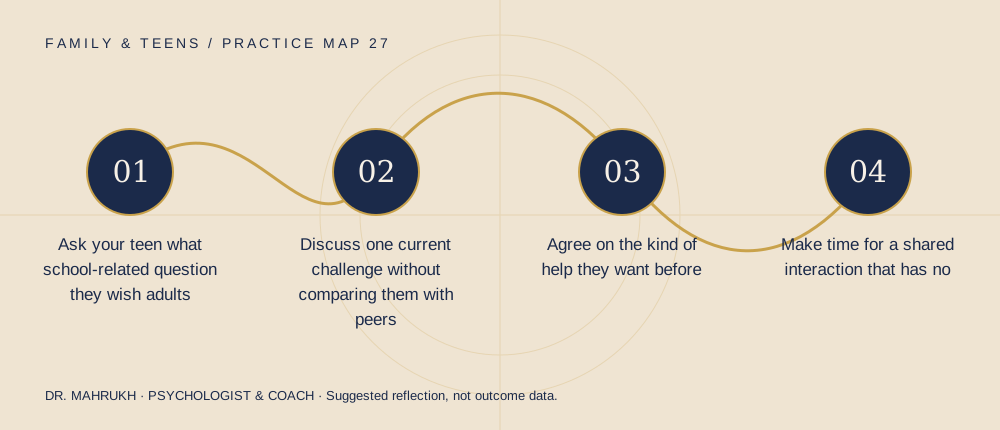
A small experiment to try
- Ask your teen what school-related question they wish adults would stop asking.
- Discuss one current challenge without comparing them with peers or siblings.
- Agree on the kind of help they want before providing it.
- Make time for a shared interaction that has no achievement agenda.
Illustrative wording: “I care about how you are doing, not only the result. Do you want help planning the work, help asking the teacher a question, or just someone to listen tonight?”
What to notice
Notice whether support becomes more specific and whether conversations include life beyond achievement. If functioning or well-being changes significantly, seek appropriate assessment.
How can your teenager tell that your care is not conditional on a result?
You can reflect privately or bring this question to a conversation. Nothing you write needs to be entered on this website.
Where Dr. Mahrukh’s coaching can fit
Family coaching can help parents and young people describe what each person needs, agree on a manageable experiment, and review it without turning every conversation into a verdict. The young person’s perspective matters alongside the parent’s responsibilities.
Dr. Mahrukh is a psychologist and coach based in Reston, serving individuals, couples, families, and leaders across the DMV. A free 15-minute discovery call is a place to ask about fit, methods, and the next practical step.
This is general parenting education, not a diagnosis. Significant changes in safety, functioning, eating, sleep, or mood deserve appropriate professional assessment. Ask about participation and confidentiality before arranging support for a minor.
15 minutes · No obligation · In person in Reston or online
Sources & context
This article combines original educational examples with background reading. Illustrations describe possibilities, not actual clients or promised outcomes.
American Academy of Pediatrics: Family Media Plan ↗Prepared with AI assistance for Mintlife Health editorial. Approved for publication on September 13, 2026. Educational information; not represented as personally authored or clinically reviewed by Dr. Mahrukh.