You announce that screen time is over. Your child says the game cannot stop yet. The same argument happens tomorrow, with slightly different words and exactly the same frustration. A rule made in the middle of a conflict may be hard to understand or apply consistently. A family media conversation works better when it includes the purpose of the rule, practical exceptions, and adults’ behavior too. The aim is a workable household agreement, not winning a contest against technology.
Plan for the real uses of a screen
The American Academy of Pediatrics offers a family media planning resource. Building on that broad planning idea, this original exercise separates schoolwork, creative activity, social contact, and entertainment. A single total may hide important differences. Discuss where devices belong, how transitions will be signaled, and what happens when school or family circumstances change. A rule should be understandable before it is enforced. Adults can model the same attention boundaries where appropriate without pretending children and adults have identical responsibilities.
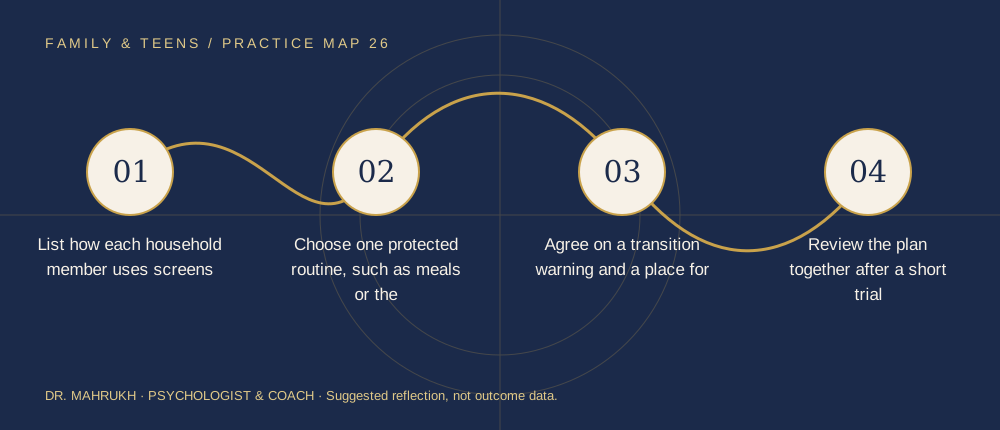
A small experiment to try
- List how each household member uses screens.
- Choose one protected routine, such as meals or the lead-up to bed.
- Agree on a transition warning and a place for devices.
- Review the plan together after a short trial.
Illustrative agreement: “At dinner, phones stay away for everyone unless someone is handling a genuine work or family emergency. If that happens, we explain it rather than silently scrolling.”
What to notice
Look at conflict frequency, sleep routines, and whether the agreement is realistic. Screen limits should support family life rather than become its only topic.
What do you want the screen boundary to protect?
You can reflect privately or bring this question to a conversation. Nothing you write needs to be entered on this website.
Where Dr. Mahrukh’s coaching can fit
Family coaching can help parents and young people describe what each person needs, agree on a manageable experiment, and review it without turning every conversation into a verdict. The young person’s perspective matters alongside the parent’s responsibilities.
Dr. Mahrukh is a psychologist and coach based in Reston, serving individuals, couples, families, and leaders across the DMV. A free 15-minute discovery call is a place to ask about fit, methods, and the next practical step.
This is general parenting education, not a diagnosis. Significant changes in safety, functioning, eating, sleep, or mood deserve appropriate professional assessment. Ask about participation and confidentiality before arranging support for a minor.
15 minutes · No obligation · In person in Reston or online
Sources & context
This article combines original educational examples with background reading. Illustrations describe possibilities, not actual clients or promised outcomes.
American Academy of Pediatrics: Family Media Plan ↗Prepared with AI assistance for Mintlife Health editorial. Approved for publication on September 13, 2026. Educational information; not represented as personally authored or clinically reviewed by Dr. Mahrukh.