You may want to let go of bitterness and still be unsure whether someone should have the same access to your life. Other people may treat forgiveness, reconciliation, and trust as a single decision. They are not necessarily the same process. A coaching conversation can help you clarify what each word means to you and what choices remain yours. This is especially important when family or faith language makes it difficult to express uncertainty without feeling guilty.
Name the decisions separately
The manuscript’s forgiveness chapter offers a useful starting distinction between inner work and practical responsibility. In this original reflection, write separate answers to four questions: what am I feeling, what contact feels appropriate, what behavior would rebuild trust, and what do I freely choose now? You do not need a final answer to every question today. Do not use the exercise to minimize abuse or pressure yourself toward contact. Religious and legal questions may need guidance beyond the scope of coaching.
A small experiment to try
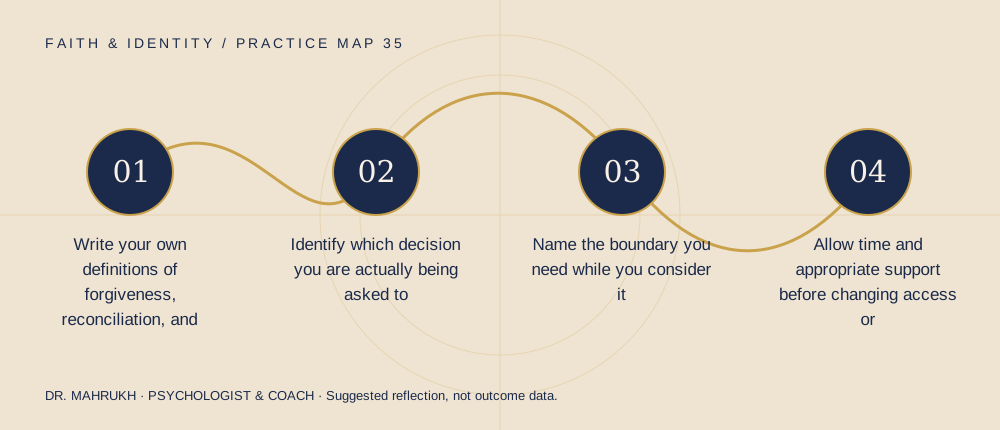
- Write your own definitions of forgiveness, reconciliation, and trust.
- Identify which decision you are actually being asked to make.
- Name the boundary you need while you consider it.
- Allow time and appropriate support before changing access or commitments.
Illustrative wording: “I am working through what happened. I am not ready to resume the same level of contact. I will let you know if that changes.” This communicates a current decision without promising a future one.
What to notice
Notice whether your decisions feel more deliberate and less driven by pressure. Someone else’s preferred timeline is not a measure of your progress.
Which choice do you need permission to consider separately?
You can reflect privately or bring this question to a conversation. Nothing you write needs to be entered on this website.
Where Dr. Mahrukh’s coaching can fit
Faith-based guidance and spiritual psychology are available within Dr. Mahrukh’s coaching when the client wants them included. The conversation can hold values, family expectations, and personal experiences together without assuming every Muslim or every household has the same needs.
Dr. Mahrukh is a psychologist and coach based in Reston, serving individuals, couples, families, and leaders across the DMV. A free 15-minute discovery call is a place to ask about fit, methods, and the next practical step.
Spiritual reflection is optional. It should not be used to excuse mistreatment, blame someone for distress, or discourage appropriate health care. This guide is not a religious ruling.
15 minutes · No obligation · In person in Reston or online
Sources & context
This article combines original educational examples with background reading. Illustrations describe possibilities, not actual clients or promised outcomes.
Save Your Marriage — supplied manuscript, chapters 1–12 ↗Prepared with AI assistance for Mintlife Health editorial. Approved for publication on September 13, 2026. Educational information; not represented as personally authored or clinically reviewed by Dr. Mahrukh.