You are the person who remembers, organizes, follows up, and notices when someone needs help. That role may come from love, necessity, habit, or all three. It can also make your own needs difficult to name. Asking for support may feel selfish when another person’s needs are urgent. But a plan that depends on you having unlimited capacity is still a fragile plan. The conversation can begin with a concrete task rather than a complete explanation of everything you are carrying.
Ask for a defined contribution
An original support map separates tasks only you can do from tasks someone else could learn, share, or take over. Include the coordination work in the map. A request such as “I need more help” may express the truth without telling another person how to respond. “Can you take responsibility for the Tuesday appointment, including the ride and follow-up call?” is more actionable. Sometimes personal help is unavailable; community resources, employer support, or professional services may need to be explored.
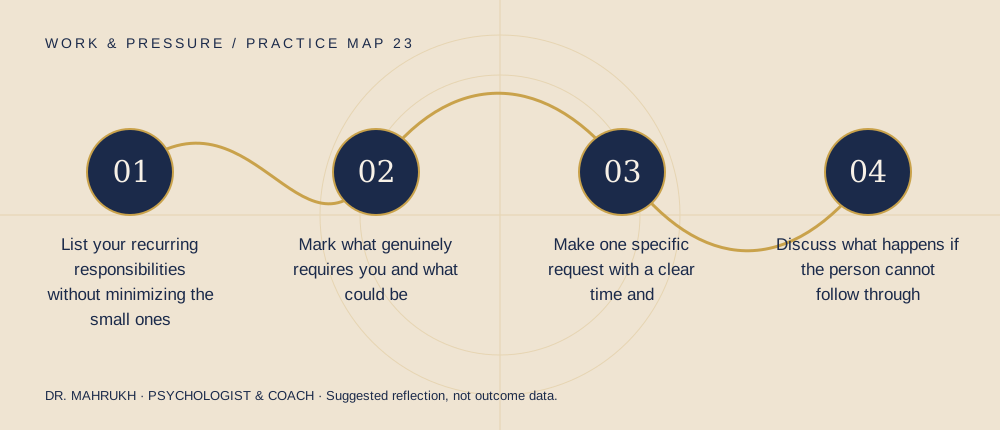
A small experiment to try
- List your recurring responsibilities without minimizing the small ones.
- Mark what genuinely requires you and what could be shared.
- Make one specific request with a clear time and scope.
- Discuss what happens if the person cannot follow through.
Illustrative wording: “I can manage the medication pickup, but I cannot also cover the weekly transport. Can you own that part this month, or help me find another arrangement?”
What to notice
Track whether the responsibility actually moves, including planning and follow-up. Help that still requires continuous supervision may not provide the relief you need.
What is one responsibility you should not have to carry alone?
You can reflect privately or bring this question to a conversation. Nothing you write needs to be entered on this website.
Where Dr. Mahrukh’s coaching can fit
Executive and personal coaching can help turn a broad concern such as balance into a concrete conversation about priorities, workload, boundaries, and relationships. It is also a place to distinguish what you can change personally from what requires a manager, organization, or structural solution.
Dr. Mahrukh is a psychologist and coach based in Reston, serving individuals, couples, families, and leaders across the DMV. A free 15-minute discovery call is a place to ask about fit, methods, and the next practical step.
This guide is educational. If symptoms are persistent, severe, or disrupting daily functioning, seek an appropriate health professional. A workplace problem is not automatically a failure of your mindset.
15 minutes · No obligation · In person in Reston or online
Sources & context
This article combines original educational examples with background reading. Illustrations describe possibilities, not actual clients or promised outcomes.
NIMH: Caring for Your Mental Health ↗Prepared with AI assistance for Mintlife Health editorial. Approved for publication on September 13, 2026. Educational information; not represented as personally authored or clinically reviewed by Dr. Mahrukh.