A family meeting can sound like a warm idea until everyone expects a long list of complaints. Children brace for correction; parents arrive with accumulated frustrations. A useful meeting needs a narrower job. Choose one practical issue and make the structure predictable. The goal is not to solve the family in one sitting. It is to show that a shared problem can be discussed without everyone defending their entire character or waiting for the most powerful person to deliver the answer.
Give each person a real turn
An original fifteen-minute format includes an observation, one concern, possible options, and a small agreement. Let participants know the topic beforehand. Use language that describes what is happening: “Mornings are running late” rather than “Nobody in this house is responsible.” Young people can offer ideas appropriate to their age. Parents still hold responsibility for safety and necessary limits. If an issue is too emotionally charged for this format, pause rather than using the meeting to force a disclosure or settlement.
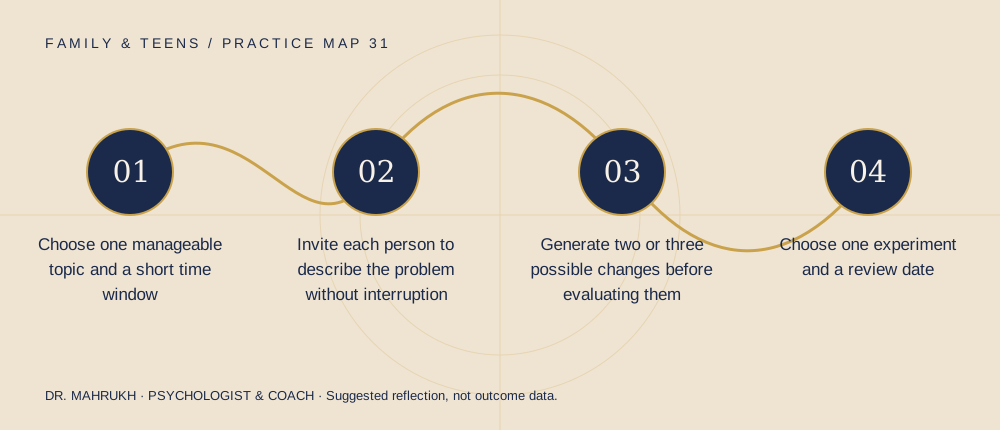
A small experiment to try
- Choose one manageable topic and a short time window.
- Invite each person to describe the problem without interruption.
- Generate two or three possible changes before evaluating them.
- Choose one experiment and a review date.
Illustrative agreement: For one week, bags and shoes go by the door the night before. At the next meeting, the family discusses whether that helped and what still made mornings difficult.
What to notice
Track whether the agreement was clear and whether everyone understood their part. A short meeting that produces one usable change can be enough.
What is the smallest shared problem your family could work on together?
You can reflect privately or bring this question to a conversation. Nothing you write needs to be entered on this website.
Where Dr. Mahrukh’s coaching can fit
Family coaching can help parents and young people describe what each person needs, agree on a manageable experiment, and review it without turning every conversation into a verdict. The young person’s perspective matters alongside the parent’s responsibilities.
Dr. Mahrukh is a psychologist and coach based in Reston, serving individuals, couples, families, and leaders across the DMV. A free 15-minute discovery call is a place to ask about fit, methods, and the next practical step.
This is general parenting education, not a diagnosis. Significant changes in safety, functioning, eating, sleep, or mood deserve appropriate professional assessment. Ask about participation and confidentiality before arranging support for a minor.
15 minutes · No obligation · In person in Reston or online
Sources & context
This article combines original educational examples with background reading. Illustrations describe possibilities, not actual clients or promised outcomes.
American Academy of Pediatrics: Family Media Plan ↗Prepared with AI assistance for Mintlife Health editorial. Approved for publication on September 13, 2026. Educational information; not represented as personally authored or clinically reviewed by Dr. Mahrukh.