A visit, a phone call, or a request for help becomes an argument about loyalty. One person feels their family is being rejected; the other feels their home has no boundaries. These conversations can become especially charged when cultural expectations are left unspoken. The first task is not to decide which family is right. It is to name what each person has assumed and what the couple can realistically agree to. Respect and access are related, but they are not the same thing.
Build the agreement before delivering the message
An original boundary-planning exercise starts with three questions: what matters to us, what can we offer, and what cannot continue? A boundary should describe your own action or availability rather than attempt to control someone else’s feelings. If partners disagree, work on that disagreement privately before sending mixed messages to relatives. Avoid asking someone to prove love by choosing a side. You can acknowledge that a change may disappoint family members without treating disappointment as evidence the boundary is wrong.
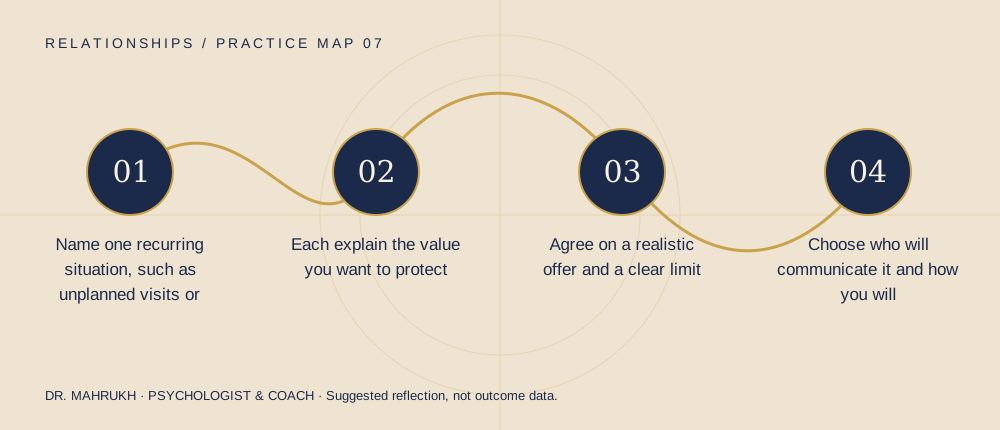
A small experiment to try
- Name one recurring situation, such as unplanned visits or repeated financial requests.
- Each explain the value you want to protect.
- Agree on a realistic offer and a clear limit.
- Choose who will communicate it and how you will support each other.
Illustrative wording: “We would love to see you on Saturday afternoon. Weeknight visits need advance notice because we are protecting the children’s bedtime.” The message does not require a long defense of your character.
What to notice
Review whether the boundary is clear, consistently applied, and workable. Reconsider logistics when needed without abandoning the underlying need.
Which expectation have you inherited without discussing it together?
You can reflect privately or bring this question to a conversation. Nothing you write needs to be entered on this website.
Where Dr. Mahrukh’s coaching can fit
Relationship coaching can create a structured space to hear different perspectives, identify recurring patterns, and agree on practical changes. Both people retain their own voice and choices. A productive conversation is not the same as an obligation to stay together.
Dr. Mahrukh is a psychologist and coach based in Reston, serving individuals, couples, families, and leaders across the DMV. A free 15-minute discovery call is a place to ask about fit, methods, and the next practical step.
These exercises assume it is safe to speak freely. If there is intimidation, coercion, threats, or violence, prioritize confidential specialist support and safety rather than attempting a joint communication exercise.
15 minutes · No obligation · In person in Reston or online
Sources & context
This article combines original educational examples with background reading. Illustrations describe possibilities, not actual clients or promised outcomes.
Save Your Marriage — supplied manuscript, chapters 1–12 ↗Prepared with AI assistance for Mintlife Health editorial. Approved for publication on September 13, 2026. Educational information; not represented as personally authored or clinically reviewed by Dr. Mahrukh.