You regret the words almost as soon as they leave your mouth. Then comes the uncomfortable space between wanting to repair the damage and wanting to explain why you were upset. If an apology immediately becomes a defense, your partner may hear a request to dismiss the hurt. Repair starts with acknowledging what you did clearly enough that the other person does not have to argue for its reality. That does not erase your own feelings. It gives the next conversation a better foundation.
Give the apology a job it can actually do
Save Your Marriage includes repair attempts and accountability. An apology cannot guarantee forgiveness or a particular response. It can identify the behavior, acknowledge its impact, and name the change you intend to practice. Avoid attaching a demand for reassurance: “I said sorry, so can we stop now?” Your partner may need time. If the original disagreement still needs attention, make a separate plan to return to it. Otherwise, the apology may become a crowded conversation about two different injuries.
A small experiment to try
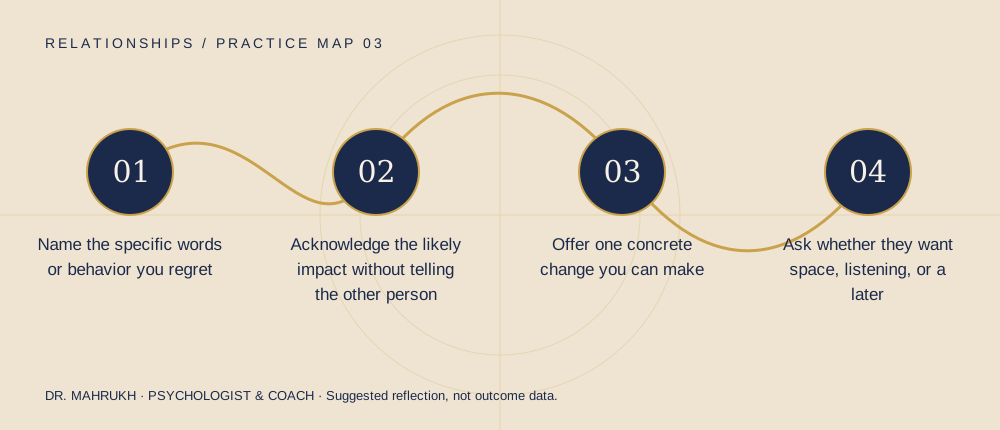
- Name the specific words or behavior you regret.
- Acknowledge the likely impact without telling the other person how they must feel.
- Offer one concrete change you can make.
- Ask whether they want space, listening, or a later conversation.
Illustrative wording: “Calling you selfish was hurtful. I was frustrated, and I am responsible for how I spoke. Next time I will ask for a pause. I can listen now, or we can talk later if you prefer.”
What to notice
Watch for follow-through in the next difficult moment. Repeating a polished apology is not the same as changing the behavior it describes.
What would make your apology easier to trust in practice?
You can reflect privately or bring this question to a conversation. Nothing you write needs to be entered on this website.
Where Dr. Mahrukh’s coaching can fit
Relationship coaching can create a structured space to hear different perspectives, identify recurring patterns, and agree on practical changes. Both people retain their own voice and choices. A productive conversation is not the same as an obligation to stay together.
Dr. Mahrukh is a psychologist and coach based in Reston, serving individuals, couples, families, and leaders across the DMV. A free 15-minute discovery call is a place to ask about fit, methods, and the next practical step.
These exercises assume it is safe to speak freely. If there is intimidation, coercion, threats, or violence, prioritize confidential specialist support and safety rather than attempting a joint communication exercise.
15 minutes · No obligation · In person in Reston or online
Sources & context
This article combines original educational examples with background reading. Illustrations describe possibilities, not actual clients or promised outcomes.
Save Your Marriage — supplied manuscript, chapters 1–12 ↗Prepared with AI assistance for Mintlife Health editorial. Approved for publication on September 13, 2026. Educational information; not represented as personally authored or clinically reviewed by Dr. Mahrukh.