One person says, “You could have asked.” The other says, “Having to ask is part of the work.” The disagreement is no longer just about a task. It is about noticing, anticipating, deciding, and remembering. Couples can miss each other here because each person is measuring a different part of the load. An honest inventory can make that difference visible. It should include paid work, caregiving, administrative work, and emotional demands without assuming gender tells you who carries which part.
Assign ownership, not just assistance
An original worksheet for this conversation has four columns: notice, plan, do, and follow up. Choose one repeated responsibility, such as school communication or groceries, and map who currently handles each part. Then discuss a complete area one person can own, with clear expectations and access to the information they need. Ownership does not mean one partner supervises the other’s every method. It means both understand what completion looks like and how changes will be communicated.
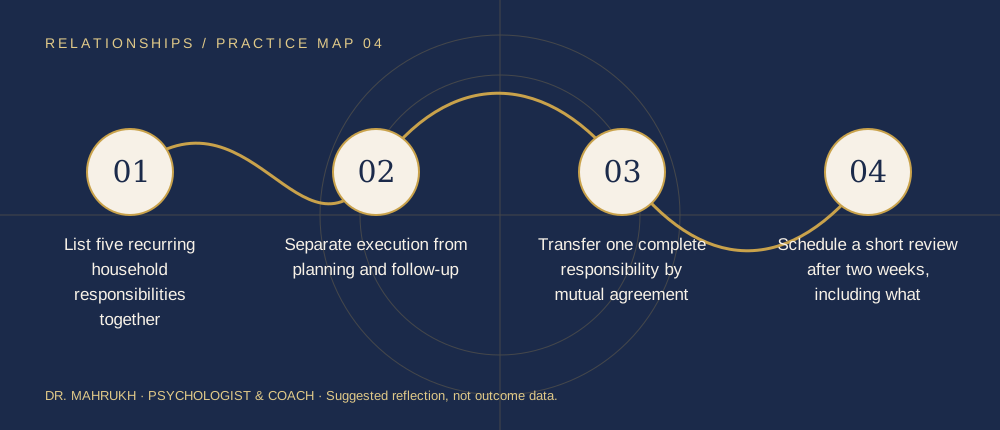
A small experiment to try
- List five recurring household responsibilities together.
- Separate execution from planning and follow-up.
- Transfer one complete responsibility by mutual agreement.
- Schedule a short review after two weeks, including what remained unclear.
Illustrative example: “Owning groceries” includes checking what is needed, planning within the budget, shopping, and noticing when a recurring item runs out. The couple agrees on constraints before debating preferences.
What to notice
Look for fewer reminders, clearer handoffs, and a more balanced sense of responsibility. Do not treat the worksheet as evidence that one person has no right to be tired.
Which responsibility would feel most relieving to share differently?
You can reflect privately or bring this question to a conversation. Nothing you write needs to be entered on this website.
Where Dr. Mahrukh’s coaching can fit
Relationship coaching can create a structured space to hear different perspectives, identify recurring patterns, and agree on practical changes. Both people retain their own voice and choices. A productive conversation is not the same as an obligation to stay together.
Dr. Mahrukh is a psychologist and coach based in Reston, serving individuals, couples, families, and leaders across the DMV. A free 15-minute discovery call is a place to ask about fit, methods, and the next practical step.
These exercises assume it is safe to speak freely. If there is intimidation, coercion, threats, or violence, prioritize confidential specialist support and safety rather than attempting a joint communication exercise.
15 minutes · No obligation · In person in Reston or online
Sources & context
This article combines original educational examples with background reading. Illustrations describe possibilities, not actual clients or promised outcomes.
Save Your Marriage — supplied manuscript, chapters 1–12 ↗Prepared with AI assistance for Mintlife Health editorial. Approved for publication on September 13, 2026. Educational information; not represented as personally authored or clinically reviewed by Dr. Mahrukh.