You start by talking about the dishes. Ten minutes later, you are arguing about who cares more. By bedtime, neither person feels understood, and the practical issue is still waiting. A recurring argument can feel like evidence that you are incompatible. It can also be a familiar sequence that neither of you has learned to interrupt. For a busy DMV household, the conversation may happen at the least generous moment of the day: after a commute, before dinner, or between work messages.
Map the sequence, not the villain
Dr. Mahrukh’s manuscript invites readers to notice the cycle between partners. For a first reflection, separate four things: the event, the meaning you gave it, your response, and your partner’s response. “They were late” is an event. “I do not matter” is an interpretation. Both deserve attention, but they are not interchangeable. Write your own version first and ask your partner to describe theirs. The purpose is to discover where the conversation changed direction, not to prove your account is the only accurate one.
A small experiment to try
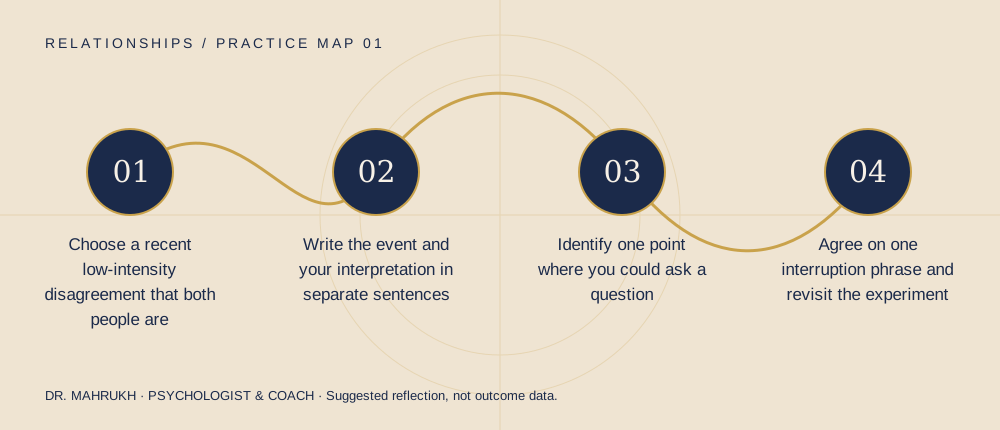
- Choose a recent low-intensity disagreement that both people are comfortable revisiting.
- Write the event and your interpretation in separate sentences.
- Identify one point where you could ask a question instead of making an accusation.
- Agree on one interruption phrase and revisit the experiment after a week.
Illustrative example: “When dinner was delayed, I assumed I was being ignored. I became sharp, and you stopped talking. Next time I want to ask what happened before I decide what it means.”
What to notice
Track whether you noticed the pattern sooner, used the agreed phrase, and returned to the practical issue. Do not use the record to score your partner.
What happens immediately before the familiar argument begins?
You can reflect privately or bring this question to a conversation. Nothing you write needs to be entered on this website.
Where Dr. Mahrukh’s coaching can fit
Relationship coaching can create a structured space to hear different perspectives, identify recurring patterns, and agree on practical changes. Both people retain their own voice and choices. A productive conversation is not the same as an obligation to stay together.
Dr. Mahrukh is a psychologist and coach based in Reston, serving individuals, couples, families, and leaders across the DMV. A free 15-minute discovery call is a place to ask about fit, methods, and the next practical step.
These exercises assume it is safe to speak freely. If there is intimidation, coercion, threats, or violence, prioritize confidential specialist support and safety rather than attempting a joint communication exercise.
15 minutes · No obligation · In person in Reston or online
Sources & context
This article combines original educational examples with background reading. Illustrations describe possibilities, not actual clients or promised outcomes.
Save Your Marriage — supplied manuscript, chapters 1–12 ↗Prepared with AI assistance for Mintlife Health editorial. Approved for publication on September 13, 2026. Educational information; not represented as personally authored or clinically reviewed by Dr. Mahrukh.