A session can feel insightful, but what does that insight change on Wednesday afternoon? If you are considering coaching, it is reasonable to ask how the work connects to your daily life. Useful goals do not all fit a numerical score. Some can be counted, some described, and some reviewed through a specific example. The important part is agreeing on what matters to you before a vague promise of transformation takes its place.
Choose a measure that serves the goal
An original progress plan has three layers: the action you are practicing, the situation where you want to use it, and what you notice afterward. For a boundary goal, count whether you communicated the boundary, then describe what happened and how you responded. Avoid setting a goal that depends entirely on another person behaving differently. You can influence a relationship without controlling it. Review frequency, session format, and whether the approach is useful should also be open for discussion.
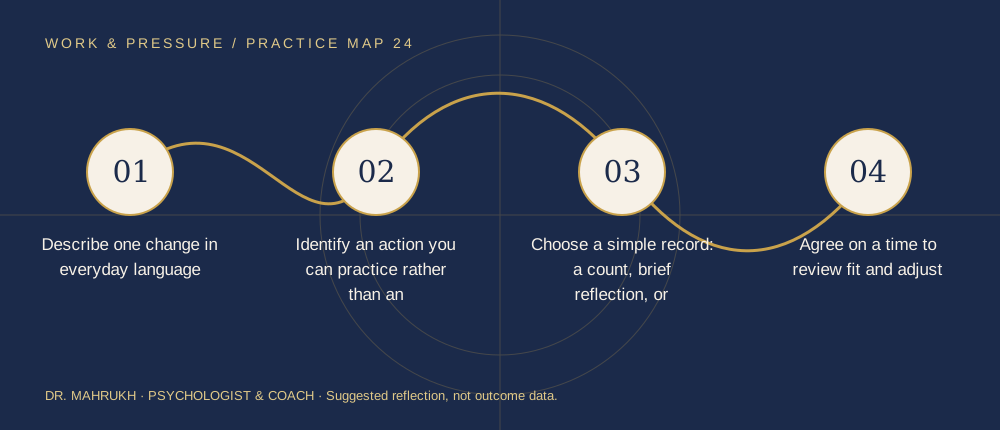
A small experiment to try
- Describe one change in everyday language.
- Identify an action you can practice rather than an outcome you cannot control.
- Choose a simple record: a count, brief reflection, or concrete example.
- Agree on a time to review fit and adjust the plan.
Illustrative goal: “Before accepting an additional task, I will ask about priority and deadline.” The measure is practicing the question and observing its usefulness—not guaranteeing a smaller workload overnight.
What to notice
Keep the record light enough that it does not become another burden. Mixed results can still tell you whether to continue, revise, or seek a different kind of support.
What would make you say the work is helping in your actual life?
You can reflect privately or bring this question to a conversation. Nothing you write needs to be entered on this website.
Where Dr. Mahrukh’s coaching can fit
Executive and personal coaching can help turn a broad concern such as balance into a concrete conversation about priorities, workload, boundaries, and relationships. It is also a place to distinguish what you can change personally from what requires a manager, organization, or structural solution.
Dr. Mahrukh is a psychologist and coach based in Reston, serving individuals, couples, families, and leaders across the DMV. A free 15-minute discovery call is a place to ask about fit, methods, and the next practical step.
This guide is educational. If symptoms are persistent, severe, or disrupting daily functioning, seek an appropriate health professional. A workplace problem is not automatically a failure of your mindset.
15 minutes · No obligation · In person in Reston or online
Sources & context
This article combines original educational examples with background reading. Illustrations describe possibilities, not actual clients or promised outcomes.
NIMH: Caring for Your Mental Health ↗Prepared with AI assistance for Mintlife Health editorial. Approved for publication on September 13, 2026. Educational information; not represented as personally authored or clinically reviewed by Dr. Mahrukh.