You have decided that support might help. Your teenager may hear something very different: “Something is wrong with you.” The way you introduce the idea matters. Be specific about the situation you want help with, and include your own role where relevant. A parent seeking help with communication is different from presenting a young person as a project to be corrected. Before arranging services, ask how participation, parental involvement, and confidentiality work for minors.
Invite questions and make the purpose clear
An original opening has three parts: what you have noticed, what you hope support could help with, and what your teenager wants to know. Avoid promising that the provider will agree with either side. Do not tell a teen that everything will be secret when you have not clarified the boundaries. Likewise, do not promise the parent will hear every detail. The provider should explain the actual arrangement. A discovery call can be used to ask about suitability before any ongoing commitment.
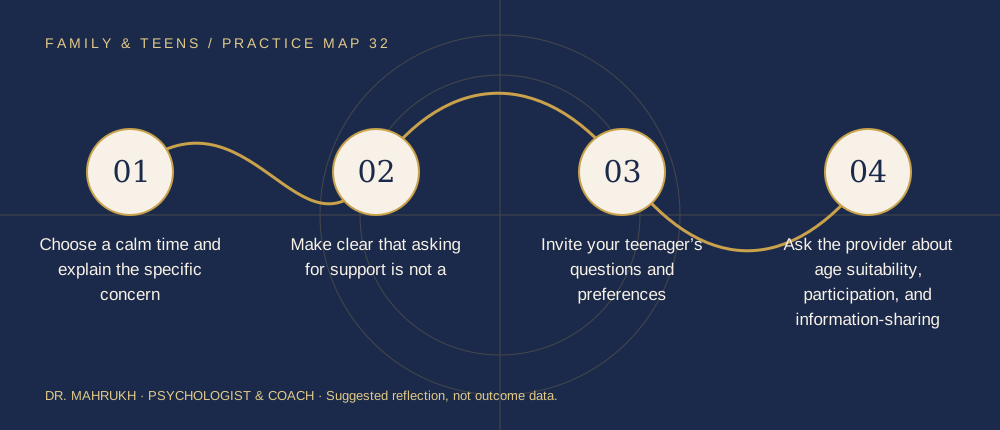
A small experiment to try
- Choose a calm time and explain the specific concern.
- Make clear that asking for support is not a punishment.
- Invite your teenager’s questions and preferences.
- Ask the provider about age suitability, participation, and information-sharing before proceeding.
Illustrative wording: “Our conversations about school have become stressful for both of us. I want help with how we handle them, including my part. What would you want to ask before we consider meeting someone?”
What to notice
Notice whether the young person understands the purpose and has a meaningful opportunity to ask questions. Compliance alone is not the same as engagement.
What would make outside support feel more understandable to your teenager?
You can reflect privately or bring this question to a conversation. Nothing you write needs to be entered on this website.
Where Dr. Mahrukh’s coaching can fit
Family coaching can help parents and young people describe what each person needs, agree on a manageable experiment, and review it without turning every conversation into a verdict. The young person’s perspective matters alongside the parent’s responsibilities.
Dr. Mahrukh is a psychologist and coach based in Reston, serving individuals, couples, families, and leaders across the DMV. A free 15-minute discovery call is a place to ask about fit, methods, and the next practical step.
This is general parenting education, not a diagnosis. Significant changes in safety, functioning, eating, sleep, or mood deserve appropriate professional assessment. Ask about participation and confidentiality before arranging support for a minor.
15 minutes · No obligation · In person in Reston or online
Sources & context
This article combines original educational examples with background reading. Illustrations describe possibilities, not actual clients or promised outcomes.
American Academy of Pediatrics: Family Media Plan ↗Prepared with AI assistance for Mintlife Health editorial. Approved for publication on September 13, 2026. Educational information; not represented as personally authored or clinically reviewed by Dr. Mahrukh.