You may be tired of making private promises and then finding yourself back in the same situation. Naming the problem can feel difficult, especially if you worry about judgment or being reduced to a label. You can ask for support before you have a perfect explanation. At the same time, an ordinary habit and substance dependence are not interchangeable. The right next step depends on safety, the behavior involved, its impact, and the kinds of care you may already need or receive.
Choose support that matches the concern
NIDA’s guidance treats addiction as a health issue that can require comprehensive care. Coaching may support goals, routines, accountability, and conversations alongside appropriate treatment. It should not be presented as detoxification, a substitute for medication, or a guaranteed way to stop substance use. Abruptly stopping some substances can be dangerous. If that may apply to you, seek medical advice before making changes. A discovery call can clarify the coaching role without requiring you to share a detailed personal history through a website form.
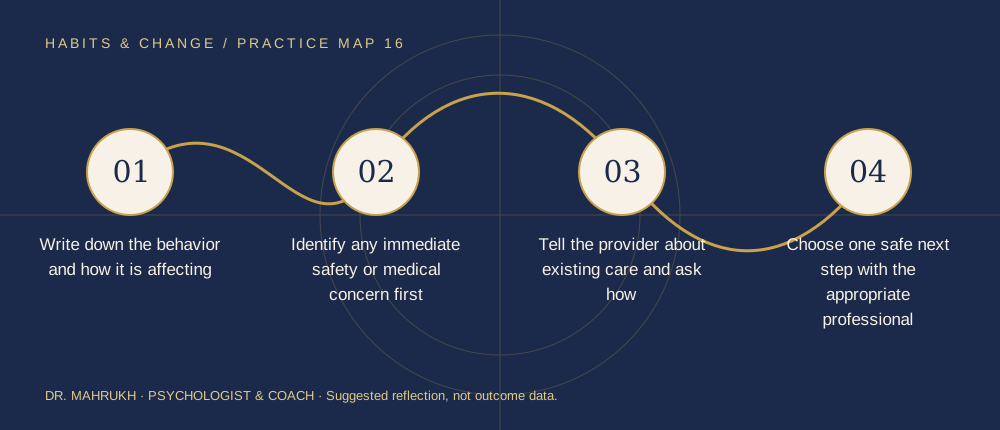
A small experiment to try
- Write down the behavior and how it is affecting daily life.
- Identify any immediate safety or medical concern first.
- Tell the provider about existing care and ask how the roles would fit together.
- Choose one safe next step with the appropriate professional support.
Illustrative inquiry: “I am looking for support with routines and accountability while receiving care elsewhere. Can we discuss whether your coaching would fit that goal and how boundaries between services would work?”
What to notice
Useful goals might concern attending agreed care, following a safe plan, or communicating support needs. They should be selected with the right professionals, not imposed by a generic checklist.
What kind of support would make the next step safer and more realistic?
You can reflect privately or bring this question to a conversation. Nothing you write needs to be entered on this website.
Where Dr. Mahrukh’s coaching can fit
A coaching conversation can explore the situation around a habit: what comes before it, what it provides in the moment, and what would make another response easier. The aim is a realistic plan you can evaluate, rather than a promise of permanent change after a fixed number of sessions.
Dr. Mahrukh is a psychologist and coach based in Reston, serving individuals, couples, families, and leaders across the DMV. A free 15-minute discovery call is a place to ask about fit, methods, and the next practical step.
Persistent distress or substance dependence can require medical care. Coaching can complement appropriate care; it does not replace assessment, medication, or medically supervised withdrawal.
15 minutes · No obligation · In person in Reston or online
Sources & context
This article combines original educational examples with background reading. Illustrations describe possibilities, not actual clients or promised outcomes.
NIDA: Principles of Drug Addiction Treatment ↗Prepared with AI assistance for Mintlife Health editorial. Approved for publication on September 13, 2026. Educational information; not represented as personally authored or clinically reviewed by Dr. Mahrukh.