You reach for the phone without remembering a decision. You delay the task until the deadline becomes urgent. You repeat a behavior you have already promised yourself to change. An unwanted habit may feel mysterious when you only pay attention to its aftermath. Looking a few moments earlier can reveal a more useful question: what was happening just before you did it? You are gathering information, not building a case against yourself. Curiosity can give a coaching conversation something concrete to work with.
Look for context before assigning a motive
A trigger map records the place, situation, feeling, action, and immediate payoff. Keep it brief. You do not need an explanation for every behavior, and not every repeated behavior has a single hidden cause. The record may show that your plan fails mostly when you are hungry, alone with your phone, or unsure how to begin a task. Those are different problems and deserve different experiments. A replacement should address the need you notice rather than merely look more respectable from the outside.
A small experiment to try
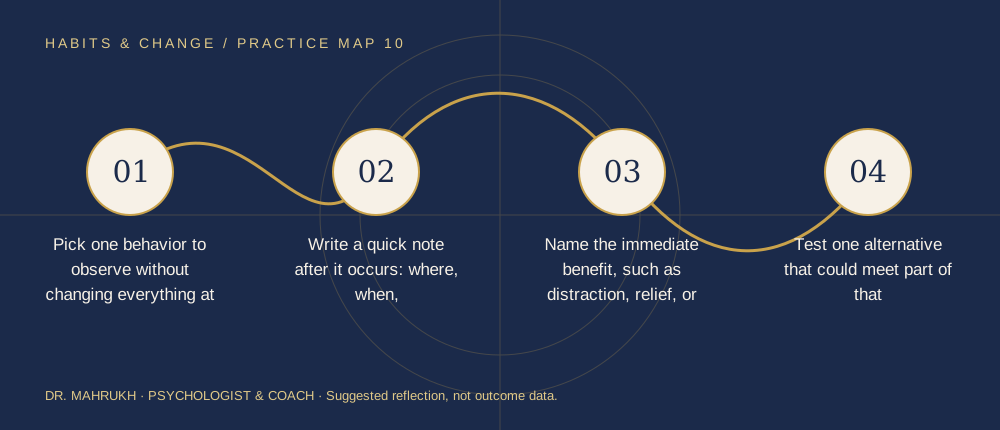
- Pick one behavior to observe without changing everything at once.
- Write a quick note after it occurs: where, when, what happened before it.
- Name the immediate benefit, such as distraction, relief, or postponement.
- Test one alternative that could meet part of that need.
Illustrative example: Scrolling begins whenever a difficult email needs an answer. The first experiment is to draft only the opening sentence before taking a planned break, rather than banning the phone for the entire day.
What to notice
Count observations and tested alternatives. Early awareness is useful even when the old behavior still happens.
What does the habit give you in the first few moments?
You can reflect privately or bring this question to a conversation. Nothing you write needs to be entered on this website.
Where Dr. Mahrukh’s coaching can fit
A coaching conversation can explore the situation around a habit: what comes before it, what it provides in the moment, and what would make another response easier. The aim is a realistic plan you can evaluate, rather than a promise of permanent change after a fixed number of sessions.
Dr. Mahrukh is a psychologist and coach based in Reston, serving individuals, couples, families, and leaders across the DMV. A free 15-minute discovery call is a place to ask about fit, methods, and the next practical step.
Persistent distress or substance dependence can require medical care. Coaching can complement appropriate care; it does not replace assessment, medication, or medically supervised withdrawal.
15 minutes · No obligation · In person in Reston or online
Sources & context
This article combines original educational examples with background reading. Illustrations describe possibilities, not actual clients or promised outcomes.
NIH: Creating Healthy Habits ↗Prepared with AI assistance for Mintlife Health editorial. Approved for publication on September 13, 2026. Educational information; not represented as personally authored or clinically reviewed by Dr. Mahrukh.