You sit down for a moment and look up much later. The evening you wanted for rest, conversation, or sleep has become a blur of headlines and short videos. Shame rarely gives you a useful next step. Start with the role the phone is playing. Is it entertainment, a break from demands, a way to avoid an uncomfortable feeling, or simply the easiest available activity? You do not have to eliminate every enjoyable screen moment to make your evening feel more intentional.
Give the boundary a destination
An original evening plan has two parts: a limit and an alternative you genuinely value. “Less phone” is difficult to recognize. “Charge the phone across the room while I read ten pages” is clearer. Avoid making every replacement productive; that can turn rest into another performance requirement. If your phone is needed for family or work, define which contact must remain available. The boundary should serve your life, not require you to pretend your responsibilities do not exist.
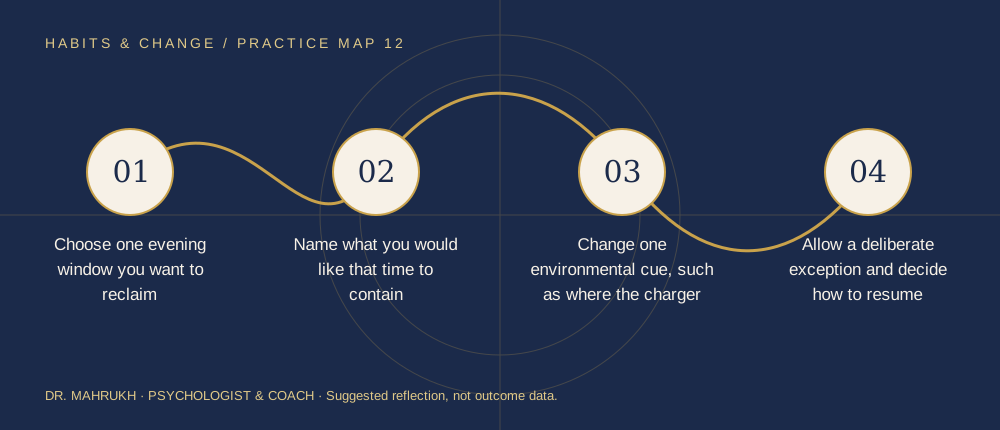
A small experiment to try
- Choose one evening window you want to reclaim.
- Name what you would like that time to contain.
- Change one environmental cue, such as where the charger lives.
- Allow a deliberate exception and decide how to resume afterward.
Illustrative example: A parent keeps calls from family enabled but leaves social apps outside a twenty-minute tea-and-reading window. The experiment is limited enough to test without rebuilding the whole evening.
What to notice
Track whether you used the chosen window as intended and how it felt. Screen minutes alone do not tell you whether you felt more rested or connected.
What would you like your phone to stop crowding out?
You can reflect privately or bring this question to a conversation. Nothing you write needs to be entered on this website.
Where Dr. Mahrukh’s coaching can fit
A coaching conversation can explore the situation around a habit: what comes before it, what it provides in the moment, and what would make another response easier. The aim is a realistic plan you can evaluate, rather than a promise of permanent change after a fixed number of sessions.
Dr. Mahrukh is a psychologist and coach based in Reston, serving individuals, couples, families, and leaders across the DMV. A free 15-minute discovery call is a place to ask about fit, methods, and the next practical step.
Persistent distress or substance dependence can require medical care. Coaching can complement appropriate care; it does not replace assessment, medication, or medically supervised withdrawal.
15 minutes · No obligation · In person in Reston or online
Sources & context
This article combines original educational examples with background reading. Illustrations describe possibilities, not actual clients or promised outcomes.
NIH: Creating Healthy Habits ↗Prepared with AI assistance for Mintlife Health editorial. Approved for publication on September 13, 2026. Educational information; not represented as personally authored or clinically reviewed by Dr. Mahrukh.