Sunday’s plan is ambitious. Monday goes well. By Thursday, work runs late, dinner changes, and the plan disappears. It is tempting to interpret that sequence as a character flaw. Before doing that, inspect the design of the plan. Did it depend on ideal energy, a quiet home, or a schedule you rarely control? A useful habit experiment should have room for the conditions you actually encounter. The version you can repeat imperfectly is often more informative than the version you only imagine doing perfectly.
Design the smallest useful version
NIH’s habit guidance emphasizes patterns, manageable goals, and planning. For this original exercise, define a full version and a minimum version of your chosen action. The minimum should still serve the purpose: opening your journal and writing one honest sentence, for example, rather than performing an unrelated gesture just to protect a streak. Decide in advance when you will use it. That lets a difficult day become part of the plan instead of evidence that the entire plan has failed.
A small experiment to try
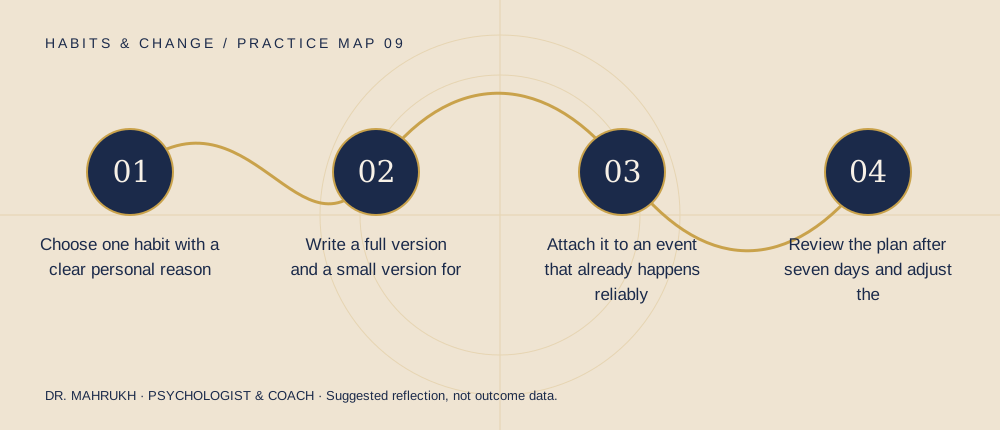
- Choose one habit with a clear personal reason.
- Write a full version and a small version for busy days.
- Attach it to an event that already happens reliably.
- Review the plan after seven days and adjust the obstacle you actually encountered.
Illustrative example: A Reston professional plans a twenty-minute walk after work, with a five-minute version on late days. The purpose is a transition out of work mode, not an impressive exercise record.
What to notice
Track attempts, context, and ease of restarting. Those observations are more useful than judging your week as either perfect or ruined.
What would your habit look like on your busiest realistic day?
You can reflect privately or bring this question to a conversation. Nothing you write needs to be entered on this website.
Where Dr. Mahrukh’s coaching can fit
A coaching conversation can explore the situation around a habit: what comes before it, what it provides in the moment, and what would make another response easier. The aim is a realistic plan you can evaluate, rather than a promise of permanent change after a fixed number of sessions.
Dr. Mahrukh is a psychologist and coach based in Reston, serving individuals, couples, families, and leaders across the DMV. A free 15-minute discovery call is a place to ask about fit, methods, and the next practical step.
Persistent distress or substance dependence can require medical care. Coaching can complement appropriate care; it does not replace assessment, medication, or medically supervised withdrawal.
15 minutes · No obligation · In person in Reston or online
Sources & context
This article combines original educational examples with background reading. Illustrations describe possibilities, not actual clients or promised outcomes.
NIH: Creating Healthy Habits ↗Prepared with AI assistance for Mintlife Health editorial. Approved for publication on September 13, 2026. Educational information; not represented as personally authored or clinically reviewed by Dr. Mahrukh.