You miss one day and begin negotiating with yourself about starting again next week. The gap grows, and returning starts to feel like admitting failure. A restart plan removes some of that negotiation. It does not deny disappointment. It tells you what to do while disappointment is present. This is particularly useful when your weeks vary because of commuting, travel, caregiving, or unpredictable work. A plan that only works during calm weeks is a plan for a life you may not have.
Prepare for interruption as part of the design
Write a simple sentence: “If I miss the usual version, my next opportunity is…” Make the opportunity concrete. Include a smaller version when appropriate and avoid compensating with an excessive catch-up effort. You can also distinguish a missed action from a plan that no longer fits. Sometimes restarting is the right move; sometimes revising the commitment is more honest. A coach can help you examine the difference without turning every adjustment into an excuse or every interruption into a moral judgment.
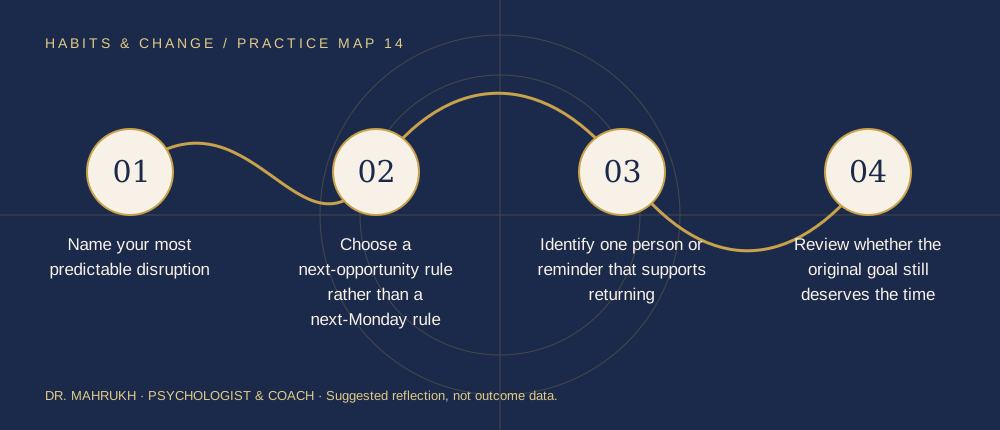
A small experiment to try
- Name your most predictable disruption.
- Choose a next-opportunity rule rather than a next-Monday rule.
- Identify one person or reminder that supports returning.
- Review whether the original goal still deserves the time you are asking it to take.
Illustrative example: After missing an evening reflection, you write one sentence with morning coffee. You do not require a long catch-up session before allowing yourself back into the routine.
What to notice
Measure how quickly you return and what made it easier. Recovery from interruption can be a meaningful skill in its own right.
What is your first manageable opportunity to restart?
You can reflect privately or bring this question to a conversation. Nothing you write needs to be entered on this website.
Where Dr. Mahrukh’s coaching can fit
A coaching conversation can explore the situation around a habit: what comes before it, what it provides in the moment, and what would make another response easier. The aim is a realistic plan you can evaluate, rather than a promise of permanent change after a fixed number of sessions.
Dr. Mahrukh is a psychologist and coach based in Reston, serving individuals, couples, families, and leaders across the DMV. A free 15-minute discovery call is a place to ask about fit, methods, and the next practical step.
Persistent distress or substance dependence can require medical care. Coaching can complement appropriate care; it does not replace assessment, medication, or medically supervised withdrawal.
15 minutes · No obligation · In person in Reston or online
Sources & context
This article combines original educational examples with background reading. Illustrations describe possibilities, not actual clients or promised outcomes.
NIH: Creating Healthy Habits ↗Prepared with AI assistance for Mintlife Health editorial. Approved for publication on September 13, 2026. Educational information; not represented as personally authored or clinically reviewed by Dr. Mahrukh.